

Main Street Economics Warns America Is Racing Toward a Fiscal Cliff
Economic Education for the American Public

Leslie A. Rubin, Founder and President, Main Street Economics
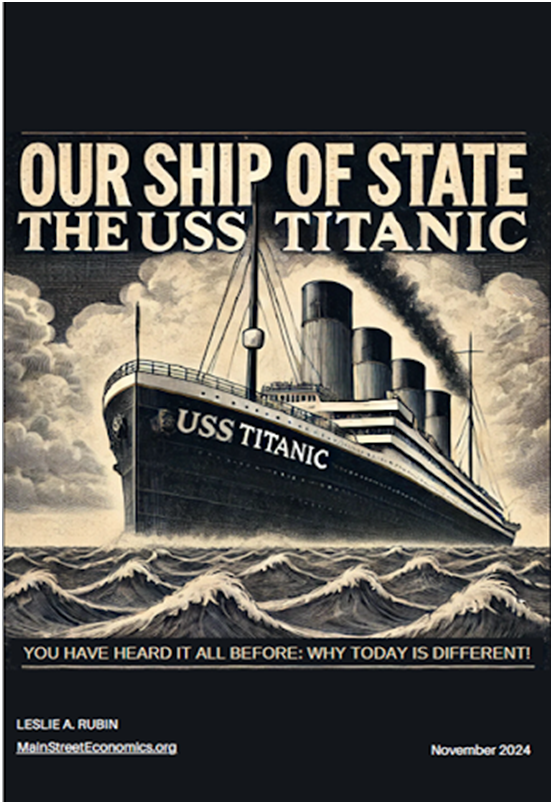
Our Ship of State
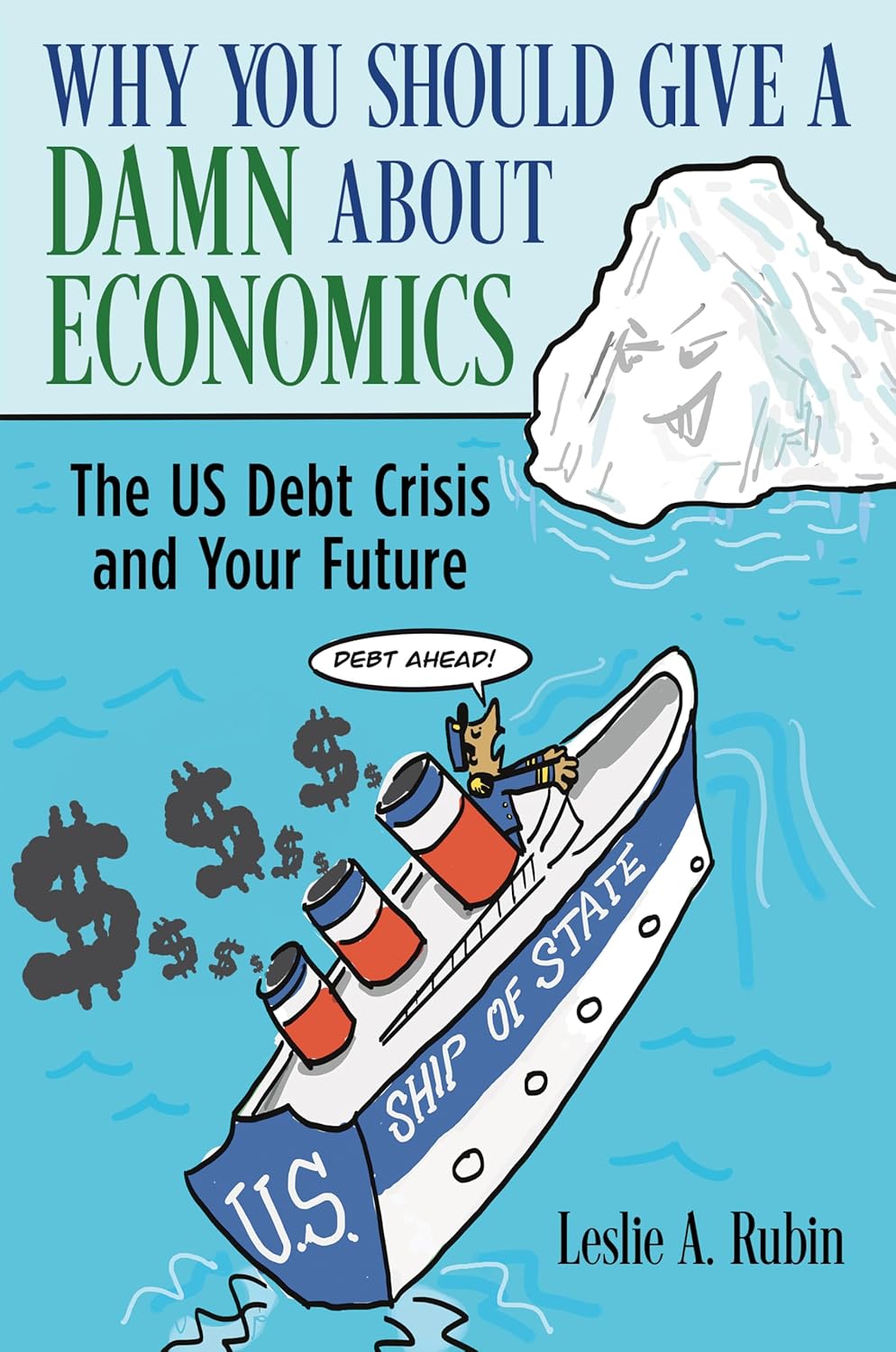
Why You Should Give a Damn about Economics: The Us Debt Crisis and Your Future
The Greatest Ponzi Scheme on Earth: How the US Can Avoid Economic Collapse
Les Rubin: “Bankruptcy Happens Slowly, Then All at Once”
The United States just passed $40 trillion in its national debt. This should not be viewed as an isolated milestone, but as a warning about a much larger structural problem that is becoming increasingly difficult to reverse.
“The fiscal cliff is in sight,” Rubin said. “The question is whether we will recognize the danger and put on the brakes before we reach the edge.”
Rubin said current projections suggest that the national debt would likely approach $70 trillion within the next decade, while Social Security and Medicare trust funds will be exhausted in 6 or 7 years and under current law, will require cuts of 24% or 11% respectively. And that doesn’t even consider the $86 trillion in unfunded obligations for the programs.
“Those projections are based on optimistic assumptions about the future that get worse every time we do new projections,” Rubin said. “They are based only on current policy and do not consider the next recession, the next war, or what new spending programs Congress will create. Every time something unexpected happens, the fiscal position gets worse.”
The federal deficit is now projected to exceed $2 trillion this fiscal year, an increase of $200 billion from the original projection, while the national debt has increased by nearly $3 trillion over the past 12 months. Rubin said the difference deserves greater scrutiny and illustrates how complicated and opaque the government's finances have become.
“We already have to borrow enormous amounts every year simply to refinance maturing debt and cover the deficit,” Rubin said. “It is a very dangerous Ponzi scheme we are running. It works if investors continue to believe that the United States can and will meet its obligations. But no one can guarantee that confidence will last forever.”
“What makes this so dangerous,” Rubin said, “is no one knows when the Ponzi scheme will collapse. There will not be a moment when somebody announces that the fiscal cliff has arrived. As Hemingway famously put it, bankruptcy happens slowly, then all at once.”
“Politicians respond to voters,” Rubin said. “Congress will not make the difficult choices required to solve this problem until the public understands the seriousness of the situation and demands action. That means Americans need to understand basic economics, including the difference between policies that encourage economic growth and policies that undermine it.”
Sound economic policies are essential to America's ability to address its fiscal challenges but warned that economic growth alone cannot solve a spending problem that continues to worsen.
“Economic growth is essential because a growing economy creates jobs, raises incomes and generates tax revenue without constantly increasing tax rates.” But we cannot grow our way out of uncontrolled spending,” Rubin said.
He also argued that Americans need to understand the tradeoffs involved in proposals for significantly larger government programs. The ‘free’ programs the socialists want are not free and can only be paid for by taxing everyone – a lot, like they do in the Scandinavian countries. ‘
Taxing the Rich’ is a platitude that sounds good and sells well, but it doesn’t come close to reality – that would never be nearly enough to pay for these programs. It is time to wake up to reality. “There is no magic money tree,” Rubin said.
“A Free enterprise/market economy is not perfect, but it is the only system ever devised that has created more wealth, opportunity and innovation than any other economic system in history,” Rubin said. “We should not destroy the engine of prosperity while waiting for some government-created utopia that does not exist.”
History provides numerous examples of the consequences of excessive taxation and government intervention, while countries with smaller governments, strong private sectors, competitive markets and incentives for investment have always had much greater prosperity.
“We have used much of our fiscal space already,” Rubin said. “When the next major recession, war or financial crisis arrives, we will need the ability to respond. If we have already exhausted our borrowing capacity, what will we do then?”
The consequences of failing to act now will be severe. “If we wait until the crisis arrives, it will be too late,” Rubin said. “We will be out of choices, and the dire consequences will fall on every American man, woman and child.”
Main Street Economics is focused on helping ordinary Americans understand these issues so they can make informed decisions. “This is ultimately an education problem,” Rubin said. “We need to explain what is happening in language that ordinary Americans can understand. People do not need to be economists to understand that you cannot continually spend more than you earn, borrow the difference and assume the bill will never come due. That is the recipe for bankruptcy.”
The nation's fiscal future remains in the hands of its citizens. “There is no fairy coming to sprinkle magic dust over this problem,” Rubin said. “We must make difficult choices. We must control spending, encourage economic growth and preserve the incentives that made America the most prosperous country in the world. Most importantly, we must do it before the big crisis destroys us.”
“America has the resources, ingenuity and economic strength to solve this problem,” Rubin said. “What we need is the public understanding and support for the difficult political decisions needed to put on the brakes before we speed over the cliff into oblivion.”
###
About Main Street Economics
Main Street Economics was formed to provide Economic Education for the American public. We focus on explaining the fiscal problems we face and basic economics in easy-to-understand language by laymen for laymen without formal education in economics. For more information on Main Street Economics and its initiatives, please visit https://www.mainstreeteconomics.org/
To schedule an interview with Les Rubin, please contact Dan Rene at 202-329-8357 or dan@danrene.com.
Dan Rene
Dan Rene Communications
+1 202-329-8357
email us here
Visit us on social media:
X
Our debt has skyrocketed. Our economy is unstable. Learn more about the US Debt Bomb at https://www.mainstreeteconomics.org/
Legal Disclaimer:
EIN Presswire provides this news content "as is" without warranty of any kind. We do not accept any responsibility or liability for the accuracy, content, images, videos, licenses, completeness, legality, or reliability of the information contained in this article. If you have any complaints or copyright issues related to this article, kindly contact the author above.
